Meet Jakob Kreye
June 26, 2026
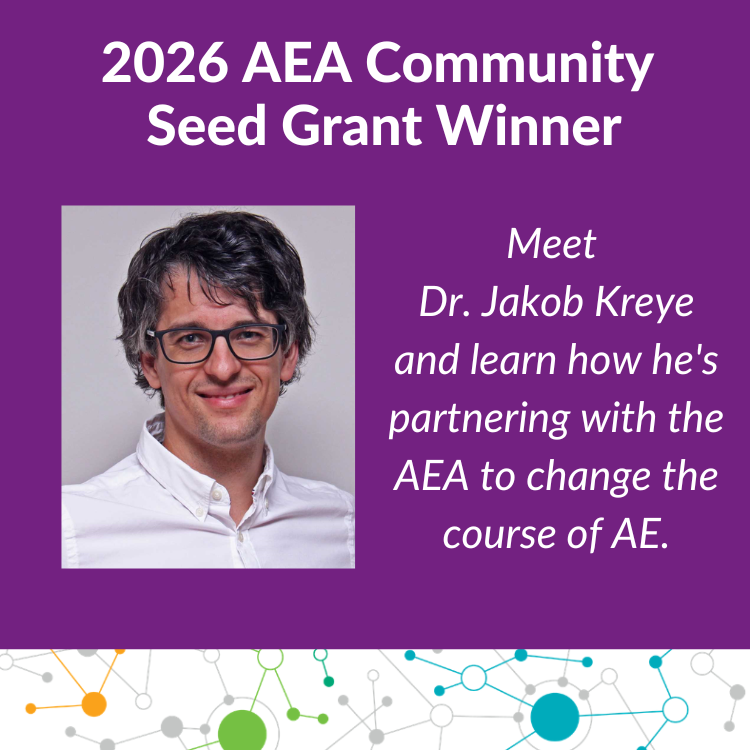
Dr. Jakob Kreye (Charité – Universitätsmedizin Berlin ) was awarded a 2026 AEA Edward Arditte Community Seed Grant to support his project, Encephalitis Encyclopedia (Enc²): A Web-Based Platform for Patient-Level Data Integration in Autoimmune Encephalitis. Learn more about his research and how it will impact people affected with autoimmune encephalitis. The start date for the award is September 1, 2026.
You have been awarded an AEA Community Seed Grant, can you tell us more about the study you plan to do?
Autoimmune encephalitis (AE) includes a growing number of individually rare diseases caused by immune responses against the brain. Many important clinical observations have been published, but this information is often scattered across case reports and small case series. This makes it difficult to compare AE subtypes, recognize rare presentations, and understand how clinical features, treatments, and outcomes differ between patients.
With the support of the AEA Edward Arditte Community Seed Grant, we will develop the Encephalitis Encyclopedia, or Enc², a web-based platform that brings published patient-level AE data together in a structured and searchable format. In the first phase, we will focus on several major AE entities, including NMDAR-, LGI1-, CASPR2-, AMPAR-, mGluR-, GABAR-, and other forms of antibody-associated encephalitis. For each reported patient, we aim to extract and harmonize key information on demographics, symptoms, diagnostic findings, treatments, and outcomes.
The project builds on preparatory work in which our team has already established the literature search strategy, data extraction workflow, and variable dictionary. More than 600 literature-derived cases have already been extracted. During the 12-month funding period, we plan to substantially expand the dataset and create a first beta version of Enc² with structured case-level access, dynamic summaries, visualizations, and standardized data export.
How will your study help patients and families affected by AE?
Patients and families affected by AE often face uncertainty because many AE forms are rare, heterogeneous, and difficult to compare. A family may wonder whether a symptom pattern, recovery course, treatment response, or complication has been reported before, but this information is often hidden across individual publications.
Enc² aims to make the published AE literature more transparent and reusable. By organizing patient-level information across AE subtypes, the platform may help clinicians and researchers identify comparable cases, recognize unusual presentations, and better understand differences in clinical presentation and reported outcomes. Over time, this could support more informed discussions about disease heterogeneity, prognosis, and future research priorities.
Importantly, Enc² is designed not only as a research tool, but also as a community-oriented resource. The first version will include accessible summaries and visualizations for non-specialist audiences, including patients and caregivers. We see this first version as a foundation for a resource that can be refined and expanded over time with input from patients, families, clinicians, researchers, and advocacy organizations — helping turn dispersed published knowledge into a shared resource for the international AE community.
Tell us more about yourself and your affiliation?
I am a clinician-scientist at Charité – Universitätsmedizin Berlin, Germany, where I work in the Department of Pediatric Neurology. My clinical and scientific work focuses on autoimmune and inflammatory diseases of the nervous system, particularly antibody-mediated neurological disorders in children and adults.
As a postdoctoral researcher in Harald Prüss’ lab at Charité Berlin, my work focused on the isolation of patient-derived monoclonal antibodies and the characterization of their functional effects in vitro and in disease models. As a Fulbright Scholar in Ben Larman’s lab at Johns Hopkins University in 2023, I used antibody profiling technologies to investigate proteome-wide antibody responses and identify disease-associated antibody signatures.
After returning to Berlin, my lab now combines broad proteomic antibody profiling with detailed analyses at the monoclonal antibody level across neuroinflammatory diseases. Enc² adds a more clinical and community-oriented perspective to this work, and I am very grateful to the Autoimmune Encephalitis Alliance and the AE community for supporting the development of a practical and openly accessible resource for autoimmune encephalitis.
Thank you to the entire AE Alliance community for the commitment to changing the course of AE. Thank you to the researchers applying for the AEA Community Seed Grant program and to the AE Alliance community, friends and family members for donating to the AEA Research Network. It is your donations that allow us to fund research focused on improving the lives of people living with AE.
Together, we are changing the course of AE.
