2024 AEA Edward Arditte Community Seed Grant Final Report: Dr. Julien Hébert
May 22, 2026
It was August 13, 2024 when we introduced Dr. Julien Hébert. Click here for the introductory post where we learned about Dr. Hébert, the study plans and how the project would help patients and families affected by AE.
In the 2024 AEA Community Seed Grant Final Report, Dr. Hébert explains the outcomes of the project, Postacute Management of Anti-Seizure Medications in Autoimmune Encephalitis-Associated Epilepsy. (Final Report submitted November 30, 2025.)
1. List the specific aims of your project and explain how they were met.
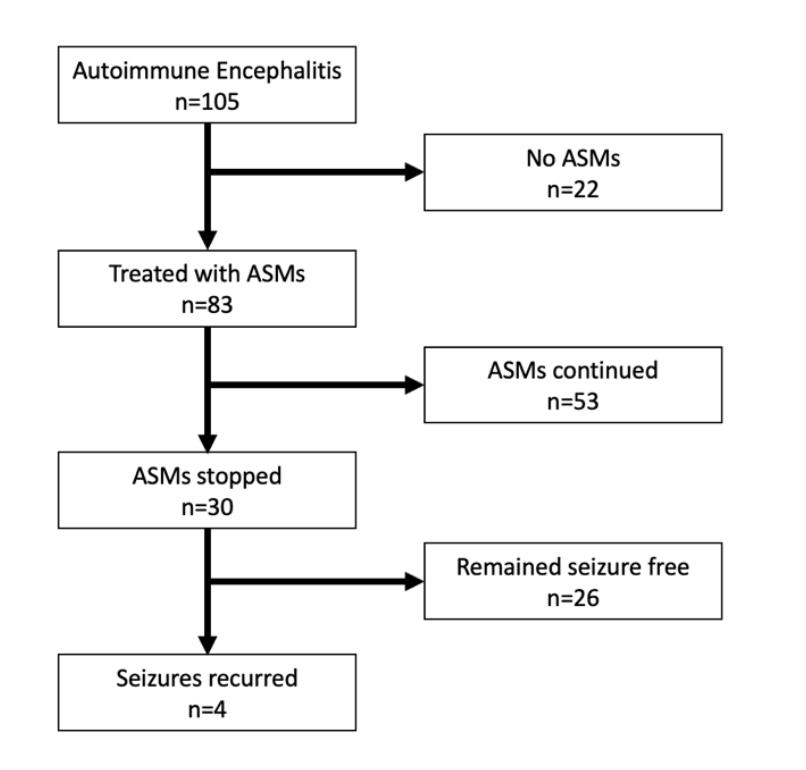
The specific aims of this project were to 1) correlate persisting interictal electrographic and neuroimaging anomalies in the postacute period with seizure outcomes in a cohort of patients with AE and 2) Compare the risks of seizure recurrence in patients being weaned from ASM at different time points in the postacute period of AE. We were able to identify 105 patients with AE seen at our center between 2012 and 2025. We found that patients with ongoing interictal discharges and mesial temporal lobe hyperintentisities were the most at risk of developing post-acute epilepsy. We identified 30 patients who were successfully weaned from their ASMs, of whom 4 (13%) developed a recurrence of seizures. We could not draw conclusions on specific factors associated with the recurrence of seizures (i.e., which factors are associated with safe withdrawal of ASM), likely due to limitations due to small numbers (i.e., only 4 patients developed recurrence of seizures). Nonetheless, through this project, we established a framework to collaborate and share data with New York University and Sinai Ican’s School of Medicine, in New York, to continue collecting data to answer this important question.
2. Describe the proposed impact/relevance of the project and the outcome.
Identifying EEG and radiographic factors associated with the development of epilepsy is especially important as it will allow us to better predict who is at risk of developing this poor outcome. In addition, the population of patients who are weaned from ASMs in the postacute phase of AE is especially important to study as it informs our understanding of what it means to have “autoimmune encephalitis associated epilepsy”. Unfortunately, in part due to the current lack of knowledge on factors that can predict safe weaning of ASMs, many patients remain on ASM, possibly unnecessarily.
3. Explain how the results of your project have direct implications for patients with AE.
This study will significantly improve the lives of patients and families affected by AE by providing a clearer understanding of who is at risk of developing epilepsy in the post-acute phase of AE and who can safely discontinue anti-seizure medications (ASM), and when. More specifically, a more detailed risk stratification will enable healthcare providers to offer personalized counseling and management plans during the postacute phase of AE. Understanding the risks of ASM withdrawal will help patients and their families make informed decisions about treatment plans.
4. How did the AEA Community Seed Grant contribute to your ability to complete this project?
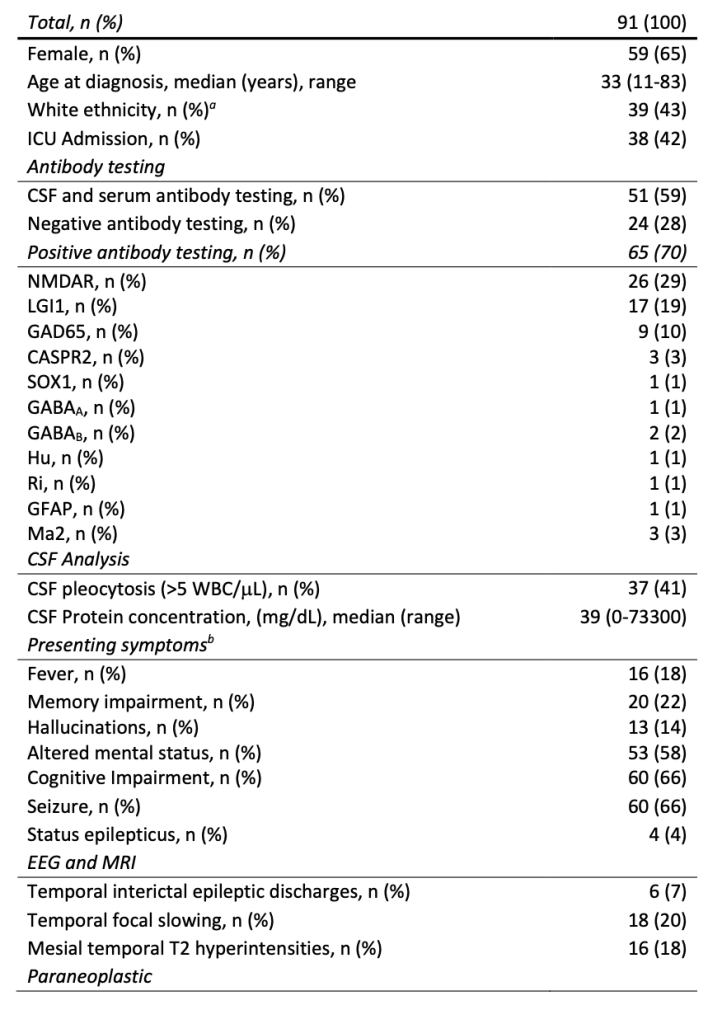
Together with another research grant from the University of Toronto, we were able to hire two part- time clinical research assistants to devote the time and energy to build a database of more than one hundred patients with AE (See table below). In addition to answering the clinical research question from this particular study, we have already started using this database to answer other research questions (including on temporal trends in delays to treatment, and on medical complications in the ICU) which will ultimately help improve the care patients with AE receive.
Thank You, Thank You, Thank You!
Thank you, Dr. Hébert, for your research and your commitment to improving the lives of patients and families impacted by AE.
Thank you to the entire AE Alliance Community for contributing during the 2023 Research Network Month which assisted in funding this seed grant project.
Thank you for your contributions this year to fund future research!
Together, we are changing the course of AE.
